
You're planning to move to Spain. Maybe the paperwork is already in motion, or maybe you're still in the dreaming-and-researching phase. Either way, you've realized something important: you need to learn Spanish.
The question isn't whether to learn — it's how. And for most people preparing for a move to Spain, online tutoring is the smartest choice. It lets you start immediately, learn from a native speaker in Spain, and maintain continuity through one of the most chaotic periods of your life.
This guide is specifically for future expats. I'll show you why online tutoring works so well for the pre-move phase, how to find the right tutor for your situation, and how to structure your learning so you arrive in Spain with real, usable Spanish skills.
Why Online Tutoring Is Perfect for Future Expats
When you're preparing to move to another country, your life is already complicated. You're dealing with visas, housing searches, selling possessions, saying goodbyes, and a thousand logistical details. Adding a rigid class schedule to that chaos is a recipe for failure.
Online tutoring solves this problem. Here's why it's ideal for the pre-move phase:
Flexibility During a Hectic Time
Your schedule is unpredictable right now. Some weeks you're drowning in paperwork; others are calmer. Online lessons can flex with your life — reschedule when the embassy appointment runs late, double up during quiet weeks, or take a break when you're packing up your apartment.
Learn From Spain While Still in Your Home Country
With online tutoring, geography doesn't matter. You can work with a tutor based in Spain — learning the accent, vocabulary, and cultural references you'll actually encounter — while you're still in the US, UK, or anywhere else. Try finding that in a local Spanish class.
Seamless Continuity Through the Move
Here's the real advantage: your tutor can stay with you. Start lessons three months before your move, continue during the transition, and keep going once you're settled in Spain. No need to find a new teacher when you arrive. Your tutor already knows your level, your goals, and your weak spots.
Targeted Preparation for Real Situations
A good tutor will customize lessons for your specific situation. Moving to Valencia? They can focus on vocabulary you'll need there. Worried about the NIE appointment? Roleplay it. Need to understand a rental contract? Go through it together. This kind of targeted practice is impossible in group classes.

Your Spanish lessons can continue right through the chaos of moving.
What to Look for in a Tutor (Specifically for Expats)
Not every Spanish tutor is right for someone preparing to move to Spain. Here's what matters most for your situation:
1. They're Actually From Spain
This isn't about Spanish being "better" in Spain — it's about learning the Spanish you'll use. A tutor from Spain teaches you the pronunciation, vocabulary, and expressions you'll hear every day. They know about vosotros, the distinción, and why "coger el bus" means something very different in Spain than in Latin America.
More importantly, a Spanish tutor understands Spanish culture: the bureaucracy quirks, the social norms, the regional differences. This context is invaluable for someone about to navigate a new country.
2. Experience with Adult Learners and Expats
Teaching Spanish to adults who are relocating is different from teaching teenagers in a classroom. Look for tutors who understand your situation — the time pressure, the specific vocabulary needs, the anxiety about integration. Ask if they've worked with other expats before.
3. Willingness to Customize Lessons
Generic curriculum won't serve you well. You need a tutor who will adapt to your goals. If you're moving to open a business, you need different Spanish than someone retiring to the Costa Blanca. A good tutor asks about your situation and builds lessons around it.
4. Strong Focus on Practical, Conversational Skills
You don't need to pass an exam — you need to function in daily life. Look for tutors who emphasize speaking and real-world scenarios over textbook exercises. You should be talking for most of every lesson, not listening to lectures.
5. Timezone-Friendly Availability
If you're in the US and your tutor is in Spain, there's a 6-9 hour time difference. Make sure your tutor offers slots that work for you — early mornings in Spain might be late evenings for you, or vice versa. And think ahead: will those times still work once you're in Spain?
Pro tip: Once you move to Spain, lessons with a Spain-based tutor become even easier to schedule — you're in the same timezone. This is another reason to start with a tutor from Spain rather than switching later.
Where to Find Online Tutors from Spain
Here are the main places to look, with honest assessments of each:
Tutoring Platforms (italki, Preply, Verbling)
Large marketplaces with thousands of Spanish tutors. You can filter by country of origin to find tutors from Spain, read reviews, and book trial lessons.
Works well if:
- • You want lots of options to compare
- • You're comfortable vetting tutors yourself
- • Budget is a major concern
Watch out for:
- • Quality varies enormously
- • Many "tutors" have no real teaching experience
- • Spain-based tutors are a small minority
Independent Tutors with Personal Websites
Professional tutors who market themselves directly. Often more experienced and committed than platform tutors, with clear information about their approach.
Works well if:
- • You value experience and professionalism
- • You want to see their teaching philosophy upfront
- • You prefer working with one person long-term
Watch out for:
- • Harder to find (requires searching beyond platforms)
- • No standardized review system
- • May have less availability
Spanish Language Schools (Online Programs)
Many language schools in Spain now offer online private lessons. Teachers are typically trained professionals with formal qualifications.
Works well if:
- • You want guaranteed professional instruction
- • You like structured curricula
- • You might continue in-person after moving
Watch out for:
- • Usually more expensive
- • Less scheduling flexibility
- • May not get the same teacher each time
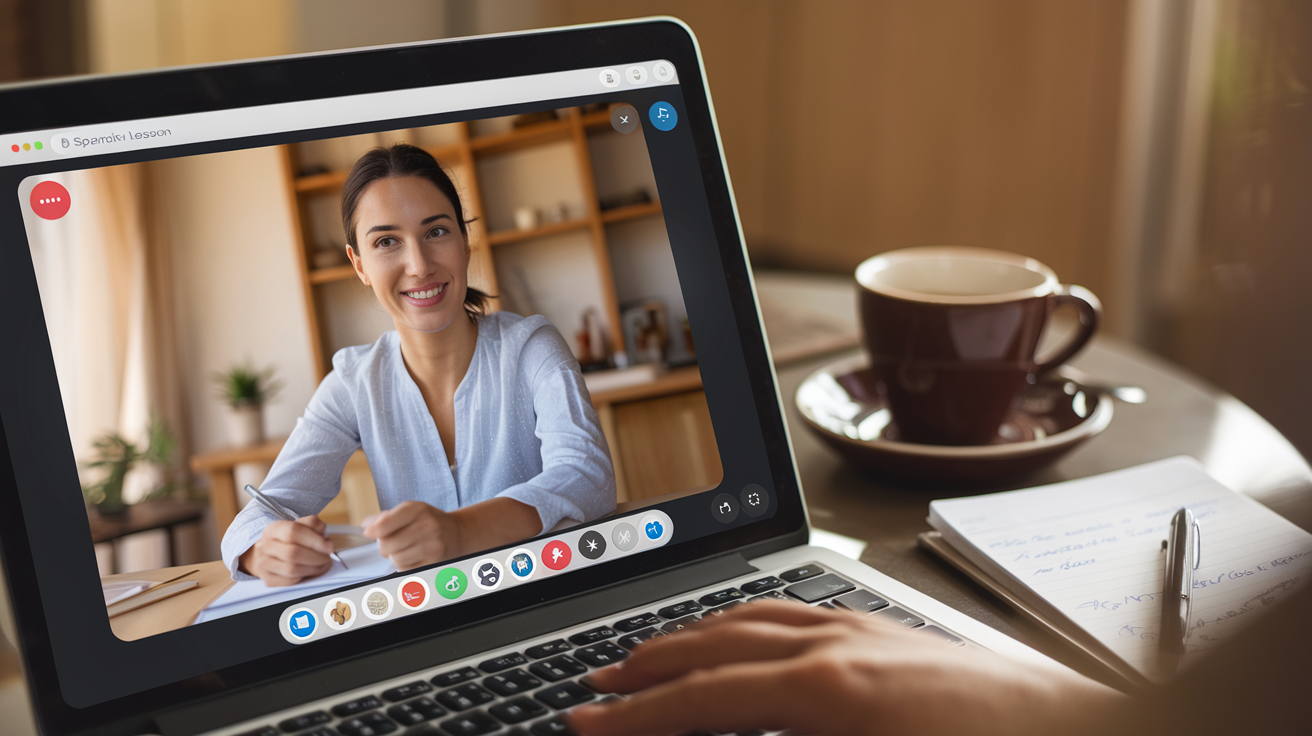
Video lessons make it easy to learn from a tutor in Spain, wherever you are.
Questions to Ask Before You Commit
Before booking regular lessons, have a conversation (most tutors offer a free consultation or trial lesson). Ask these questions:
-
1."Where in Spain are you from?"
Different regions have different accents. It's helpful to know, and it tells you something about their background.
-
2."Have you worked with expats or people moving to Spain before?"
Experience with your specific situation is valuable. They'll better understand your needs and timeline.
-
3."Can you help me prepare for specific situations — like bureaucracy, renting, or healthcare?"
This tests whether they're willing to customize lessons. A tutor who only follows a textbook may not be the best fit.
-
4."What's your teaching approach for someone at my level?"
Their answer reveals whether they have a methodology or just wing it.
-
5."How do you handle rescheduling?"
Important when your life is unpredictable. You want a tutor who's flexible, not one who charges for every missed lesson.
-
6."What times work for your schedule?"
Make sure your timezones are compatible — both now and after your move.
A Realistic Pre-Move Learning Timeline
How much Spanish can you learn before your move? Here's a realistic timeline based on weekly private lessons plus daily self-study:
| Time Before Move | Realistic Level | What You Can Do |
|---|---|---|
| 1-2 months | Basic A1 | Greetings, simple transactions, survival phrases. Better than nothing, but you'll struggle. |
| 3-4 months | Solid A1-A2 | Handle basic daily tasks, simple conversations, understand slow/clear speech. |
| 6 months | A2+ | Function in most routine situations. Can describe your situation, ask questions, follow conversations. |
| 9-12 months | Approaching B1 | Comfortable in daily life. Can handle unexpected situations, express opinions, follow most conversations. |
| 12+ months | B1+ | Conversationally comfortable. Can handle bureaucracy, build relationships, integrate socially. |
The sweet spot: If you have 6+ months before your move, you can arrive with enough Spanish to handle daily life independently. If you have less time, start immediately and plan to accelerate once you're immersed.
What to Focus on Before Your Move
Your pre-move Spanish learning should prioritize practical skills over academic completeness. Work with your tutor on these areas:
Administrative vocabulary
Words you'll need immediately: NIE, empadronamiento, cita previa, ayuntamiento, Hacienda, certificado, formulario, firmar, rellenar. Practice the phrases you'll use at appointments.
Housing and rental Spanish
Alquiler, fianza, contrato, gastos incluidos, amueblado, comunidad. Practice asking about apartments, negotiating terms, and understanding listings.
Healthcare essentials
Body parts, symptoms, common conditions. How to describe pain, explain allergies, understand basic medical instructions. "Me duele..." should be automatic.
Social conversation starters
Introducing yourself, explaining why you moved, asking about others. These conversations will happen constantly in your first months.
Numbers, dates, and times
These come up constantly: prices, appointments, addresses, phone numbers. Practice until they're reflexive.

Every conversation in Spain is a chance to practice — the better prepared you are, the more you'll enjoy it.
Continuing Lessons After You Arrive
Here's where online tutoring really shines: your learning doesn't have to stop when your life turns upside down.
Your first weeks in Spain will be chaotic. You're unpacking, setting up utilities, getting lost in your new neighborhood, and dealing with unexpected challenges. This is not the time to find a new language teacher.
With an online tutor you started working with before the move, you can:
- • Continue lessons seamlessly. Same tutor, same rhythm, just a different timezone (now easier!).
- • Bring real situations to your lessons. Confused by a document you received? Got lost in a conversation at the bank? Discuss it with your tutor who already knows your context.
- • Accelerate faster. Immersion provides constant input; your tutor helps you process and produce. It's a powerful combination.
- • Have a safe space to practice. Real interactions in Spain can feel high-stakes. Lessons are a low-pressure environment to work through challenges.
Many expats find that the combination of daily immersion plus continued tutoring leads to much faster progress than either alone. You're getting real-world exposure and structured instruction simultaneously.
Common Mistakes to Avoid
Waiting until you arrive to start
The "I'll learn when I'm there" approach wastes your most powerful preparation time. Start now, even if your move is months away.
Choosing a tutor just because they're cheap
A $15/hour tutor who doesn't push you forward is more expensive than a $40/hour tutor who accelerates your learning. Value is what matters.
Learning Latin American Spanish for a Spain move
You'll be understood, but you'll sound foreign and miss cultural nuances. Learn the Spanish you'll actually use.
Focusing only on grammar and vocabulary
Speaking practice is what you need most. Every lesson should include significant time producing Spanish, not just absorbing it.
Stopping lessons once you move
The first months in Spain are when you need structured support most. Don't abandon your tutor when immersion makes learning both harder and faster.
What to Expect to Pay
Online Spanish tutoring from Spain-based tutors typically costs:
- • Platform tutors (italki, Preply): $15-40/hour. Wide range; quality varies.
- • Independent professional tutors: $30-60/hour. Usually more experienced.
- • Language school online programs: $40-80/hour. Highest credentials, least flexibility.
For most expats, one to two lessons per week is sustainable and effective. At $40/hour, that's $160-320/month — a reasonable investment given how much easier your transition will be.
Your Next Steps
Ready to find an online Spanish tutor for your move to Spain? Here's what to do:
- 1
Start searching now
Don't wait until your move date is set. The sooner you start, the more prepared you'll be.
- 2
Try 2-3 different tutors
Book trial lessons with a few candidates. Chemistry matters — you'll be working together for months.
- 3
Be upfront about your situation
Tell potential tutors about your timeline, your goals, and the specific challenges you're anticipating.
- 4
Commit to consistency
Once you find the right tutor, commit to regular lessons. Consistency beats intensity for language learning.
- 5
Plan to continue after your move
Think of this as a long-term relationship, not just pre-move preparation.
The Bottom Line
Moving to Spain is one of the most exciting decisions you'll ever make. Learning Spanish before you go transforms that experience — from surviving to thriving, from tourist to resident, from outsider to neighbor.
An online tutor from Spain is the most effective way to prepare. You get personalized instruction, native expertise, and a relationship that carries through your move and beyond. Start now, stay consistent, and arrive ready to build your new life in Spanish.